

There comes a point where pallet racking alone can’t keep pace with the volume moving through your warehouse. Aisles built for forklift access start working against you, and the deepest, most efficient positions in your racking become the hardest ones to reach. A pallet shuttle system solves that by putting a powered carrier inside the racking itself, so pallets are stored and retrieved automatically along the length of each channel, rather than by a forklift driving in and out of it.
This guide covers how 2 way and 4 way pallet shuttle systems work, what actually separates them, and where a retrofit pallet shuttle – one sized to fit racking you already have – can get you the same result without a full racking rebuild.
What’s a pallet shuttle system?
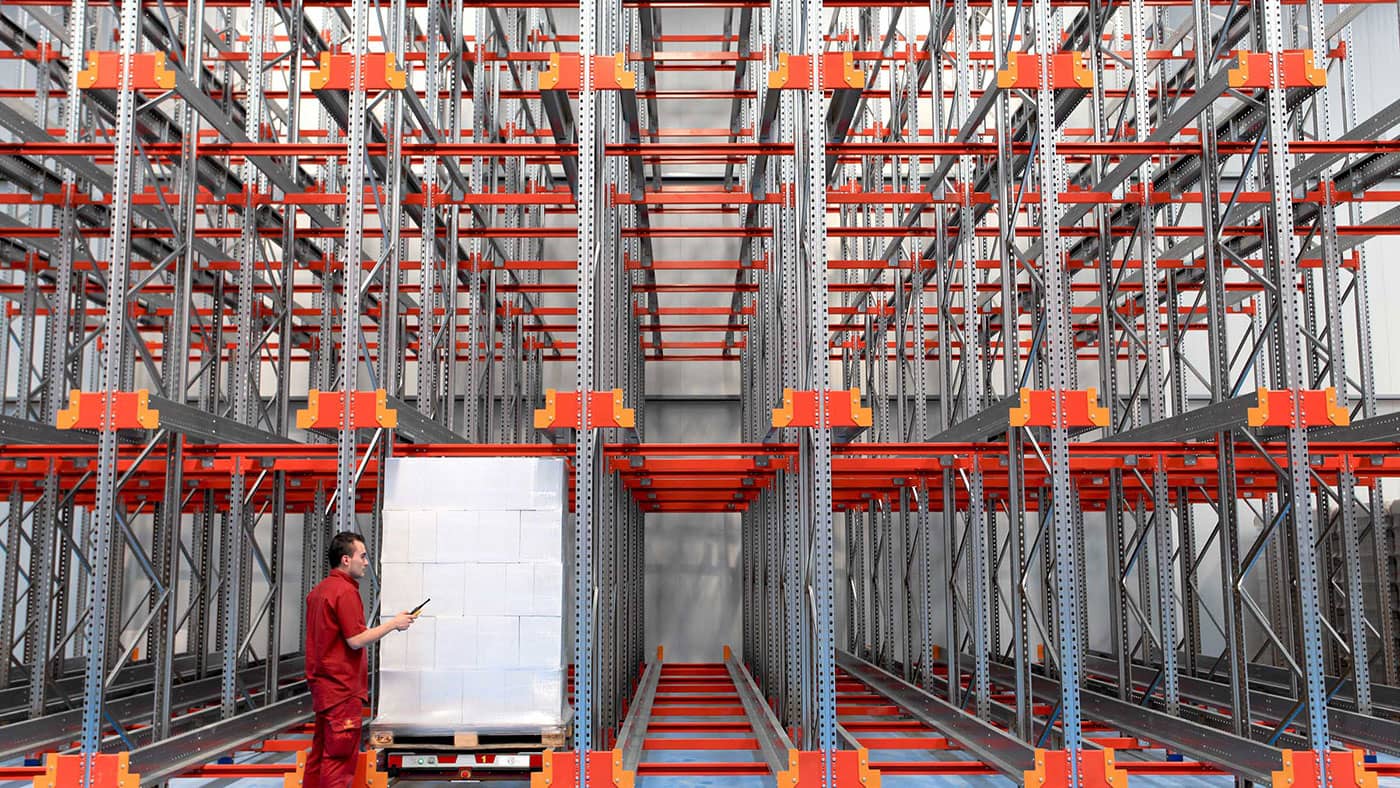
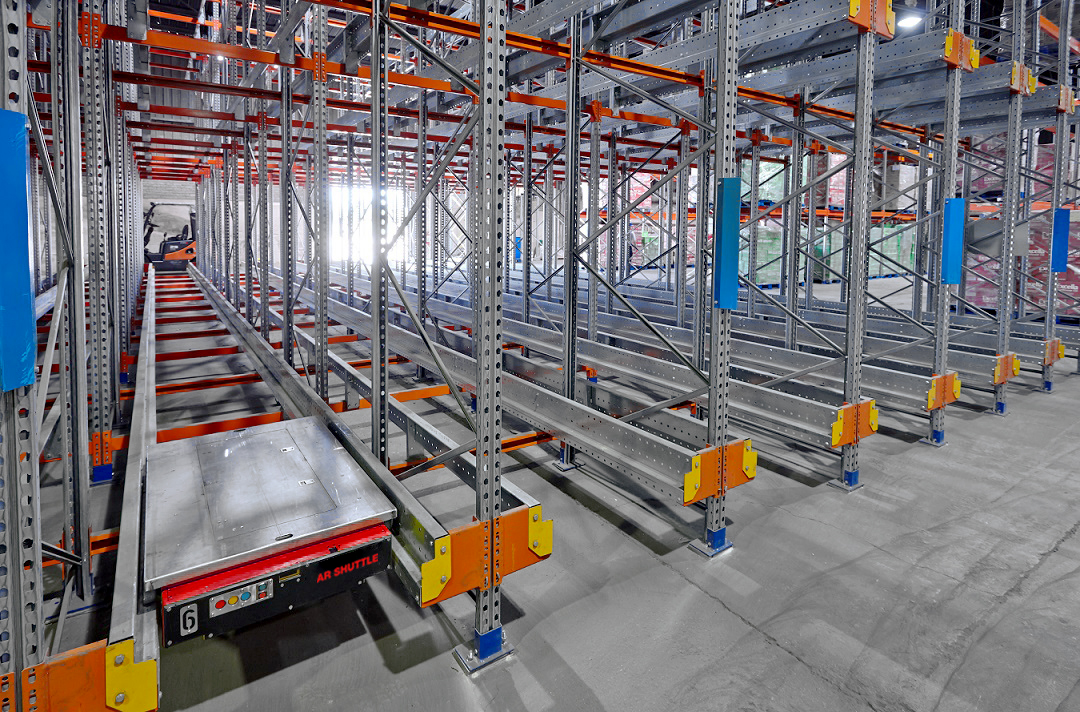
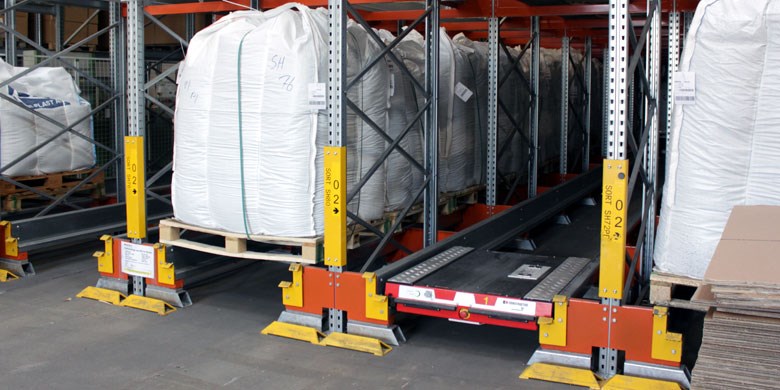
A pallet shuttle is a remote controlled, battery powered unit that sits inside a racking channel and moves pallets in and out along it. Rather than a forklift driving the full depth of a lane to place or pick a pallet, the truck loads the shuttle at the aisle end, and the shuttle carries the pallet the rest of the way, stacking channels several – sometimes tens of – pallets deep.
It’s a step on from drive-in racking, which relies on the truck itself travelling into the lane. Because the shuttle does that job instead, you get the density of drive-in storage with faster cycle times, far less risk of the truck clipping the pallet racking uprights, and a lot less driver fatigue over a full shift. It sits alongside other dynamic racking options as one of the higher density ways to store palletised stock. Most systems fall into one of two categories – 2 way pallet shuttle or 4 way pallet shuttle – and the right one depends on how your stock actually moves.
How does a 2 way pallet shuttle work?
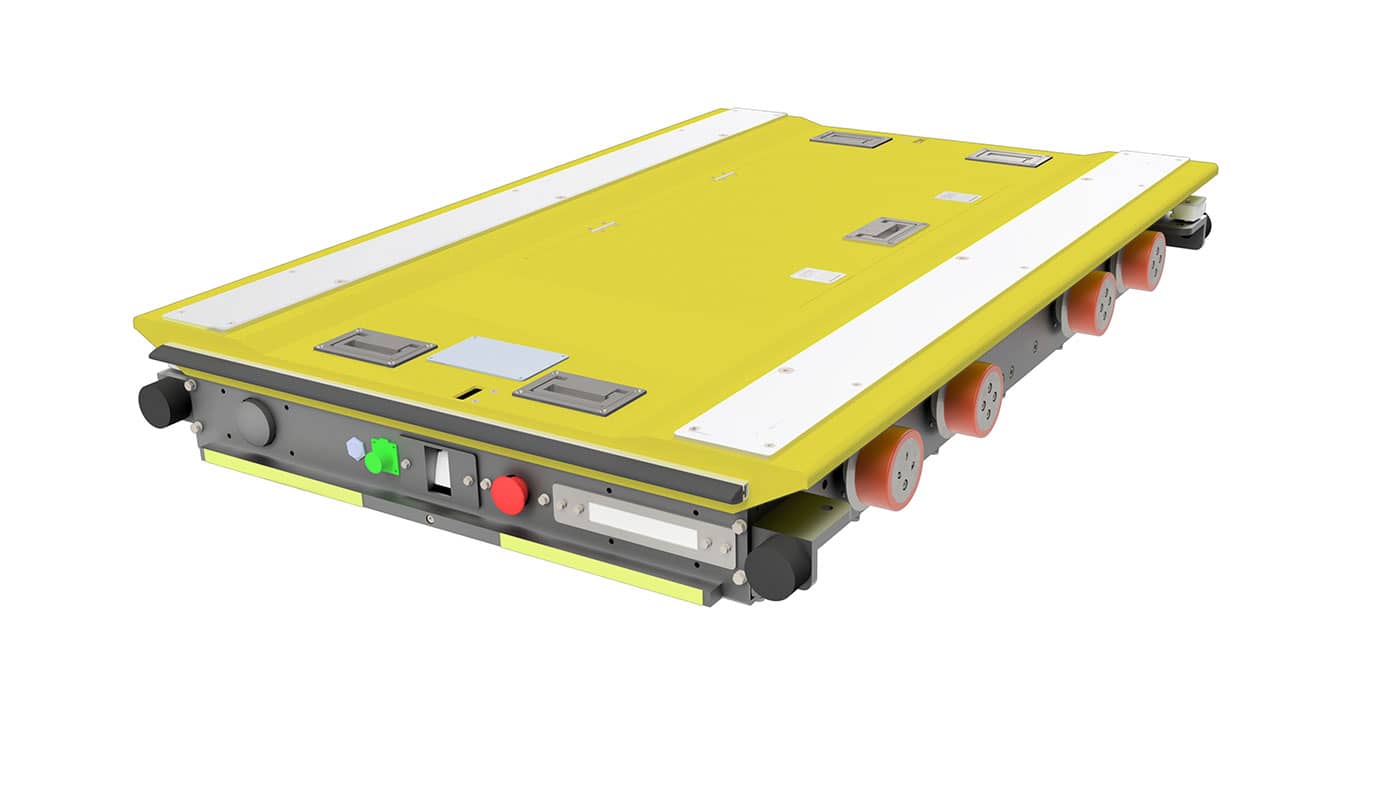
A 2 way pallet shuttle travels in a single direction along one channel – in to place a pallet, out to clear the way for the next. It’s built for last in, first out storage: high volume, low SKU count stock where the same product sits in the same lane for a run of weeks or months, and rotation order isn’t critical.
- High pallet density. Channels can run significantly deeper than a conventional aisle-and-rack layout would allow, so more stock sits in the same footprint.
- Fewer aisles, more storage. Removing the need for a truck to enter every lane frees up floor space that would otherwise be given over to access aisles.
- Suits steady, high throughput lines. Food, drink and FMCG operations running the same SKUs at volume see the strongest return from this setup.
How does a 4 way pallet shuttle work?
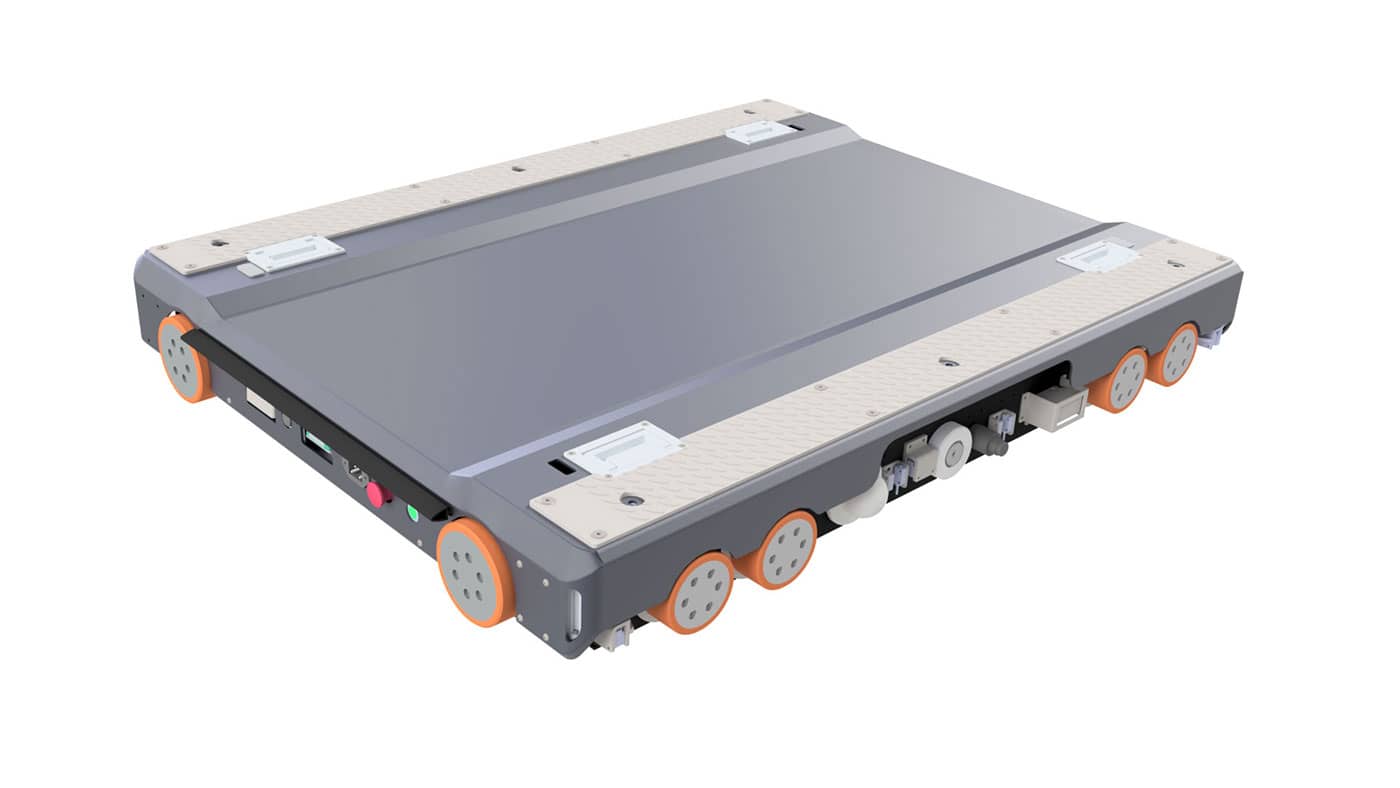
A 4 way pallet shuttle adds wheels that rotate 90 degrees, so the unit can travel both along a channel and across it, moved between lanes and levels by a transfer car. That extra mobility means one shuttle can service several channels instead of sitting permanently in a single lane, and stock can rotate on a first in, first out basis where that matters – shorter shelf life goods, mixed SKU ranges, or any warehouse handling more product lines than a 2 way setup would justify one shuttle per lane for.
The trade off is cost and complexity – a transfer car and the racking to support it add to the initial spec – but for a warehouse running varied stock with genuine rotation requirements, it’s usually the better fit.
2 way vs 4 way pallet shuttle: which fits your warehouse?
| Feature | 2 Way Pallet Shuttle | 4 Way Pallet Shuttle |
| Direction of travel | Single channel, in and out | Along and across channels via transfer car |
| Stock rotation | Last in, first out | First in, first out where needed |
| Shuttle requirement | Typically one shuttle per channel | One shuttle can service multiple channels |
| Best suited to | High volume, low SKU count, steady throughput | Mixed SKU ranges, shorter shelf life, frequent rotation |
Retrofit pallet shuttles: adding automation to pallet shuttle racking you already have
Most conversations about pallet shuttle automation start from the assumption that it means starting again – stripping out existing pallet racking and installing a new structure designed around a specific shuttle system. For a lot of warehouses, that’s simply not necessary.
A retrofit pallet shuttle is specified to work within racking you already have, rather than the racking being built around the shuttle. It’s a genuinely useful option when your storage structure is sound, the beam heights and rail centres check out, and what you actually want is the throughput and density benefit of automation – not a new racking installation.
- Works with your existing channel dimensions. The shuttle is specified against your current rail centres, beam positions and load widths, so it operates within the structure as built rather than requiring it to change.
- Avoids a full racking rebuild. Where the racking itself is in good condition, replacing only the shuttle mechanism – not the frames, beams or rails around it – keeps both the cost and the disruption down.
- Shorter lead times, less downtime. A retrofit shuttle can usually be specified, delivered and commissioned in a fraction of the time a full racking replacement would take, with far less of your warehouse out of action while it happens.
- Opens automation up to more warehouses. Not every operator is starting from a blank floor. Being able to fit a shuttle to racking that’s already doing its job well is what makes automation realistic for a business that isn’t relocating or rebuilding.
It’s worth being clear that this isn’t something every supplier can offer. Plenty will only quote a shuttle as part of a brand new racking installation designed specifically around their own system. Being able to size and supply the shuttle to suit racking that’s already in place – rather than insisting the racking changes to suit the shuttle – is a genuinely useful capability, and one that’s still fairly rare in this market. A warehouse design and survey is the most reliable way to confirm whether your current racking is a candidate for retrofit before specifying a shuttle.
Fast lead times, trials and rental: flexible ways to get started
Deciding to automate is one thing. Getting a shuttle running without months of lead time, or without committing budget to a system you haven’t tested, is another. A few options make that transition easier, whether you’re going down the retrofit route or specifying a shuttle as part of a new racking installation.
Fast lead times on selected shuttle models. Certain shuttle models are available with some of the quickest lead times in the market, so the gap between deciding to automate and having a working shuttle on site is far shorter than a lot of operators expect. Where a particular model is already in stock or in production, that lead time can be the difference between getting extra cover in place for a peak season and missing it entirely.
Trial a shuttle before you commit. A shuttle can also be trialled inside your own operation before any purchase decision is made. Running it against your actual stock, your actual volumes and your actual team gives a far more honest picture of the throughput and labour impact than a demonstration elsewhere ever could, and it takes the guesswork out of choosing between a 2 way pallet shuttle and a 4 way pallet shuttle in the first place.
Rent a shuttle if you’re not ready to buy. If a trial period isn’t enough on its own, or the capital budget for a full purchase isn’t in place yet, shuttles are also available to rent for a set period. That can cover a seasonal peak, a specific contract, or simply buy time to build the business case properly – without the warehouse missing out on the throughput benefit in the meantime.
Between the lead times on particular models, the option to trial first, and the ability to rent rather than buy outright, committing to a pallet shuttle system doesn’t have to mean a single, all or nothing capital decision made on paper before anyone’s seen it run.
Why warehouse automation is picking up pace
Pallet shuttle systems sit inside a broader shift in how UK warehouses are being run. The BBC reported in July 2026 that more than 2,000 warehouse robots have been deployed across ten UK sites by one automation provider alone, with major retailers including Tesco, Asda and Next now using similar technology – driven partly by ongoing labour shortages and pressure to improve productivity. The detail changes supplier to supplier, but the direction is consistent: more warehouses looking at automated storage and retrieval as a realistic near term step rather than a distant one.
A pallet shuttle system is one of the more accessible entry points into that shift. It doesn’t require the scale of investment a full automated storage and retrieval system does, and – with a retrofit option on the table – doesn’t require starting your racking from scratch either.
Pallet shuttle FAQs
Frequently Asked Questions
In most cases, yes, provided the existing rail centres, beam heights and load widths are compatible or can be adjusted. A site survey is the usual first step to confirm this before a retrofit shuttle is specified.
If your stock is high volume with few SKUs and rotation order isn't critical, a 2 way pallet shuttle is usually the simpler and more cost effective choice. If you're running a mixed SKU range or need first in, first out rotation, a 4 way pallet shuttle is generally the better fit.
Cost depends on the number of channels, whether you need a full racking installation or a retrofit shuttle, and whether a transfer car is required for a 4 way system. A retrofit shuttle is typically the lower cost route where your existing racking is suitable.
Yes. A shuttle can be trialled in your own warehouse so you can see the effect on throughput before committing to it, and shuttles are also available to rent for a set period if you're not ready to make a capital purchase.
Ready to talk pallet shuttle storage for your warehouse?
Whether you’re planning a new high density installation or want to know if a retrofit pallet shuttle could work with the racking you’ve already got, get in touch on 0117 955 5211 or [email protected] and we’ll talk through what fits.