

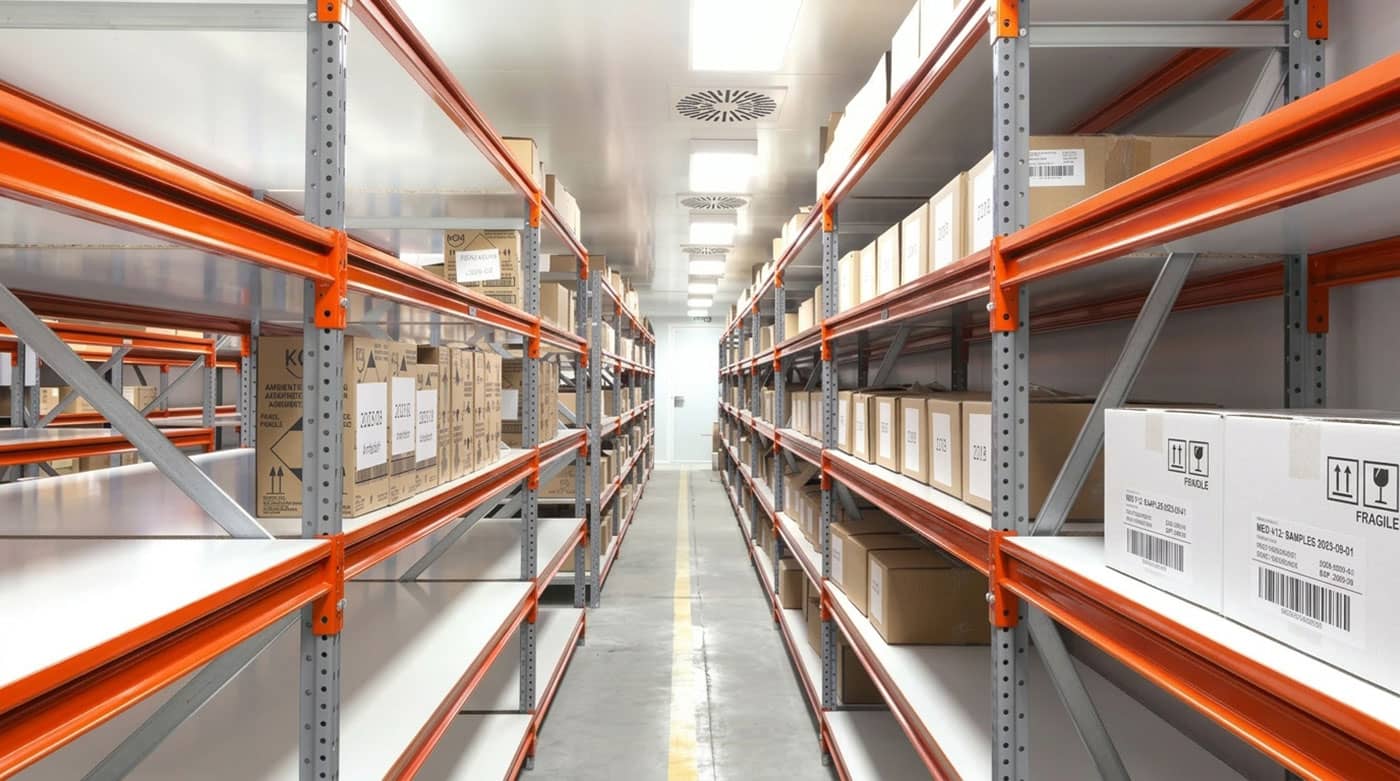
Warehouse growth is rarely a straight line. Seasonal stock levels bring throughput and workflow pressure that peaks and dips through the year, product ranges can expand faster than the floor plan was built for, and systems that worked before start to strain within a couple of years. Getting warehouse shelving right from the start leads to less reconfigurations later, and a layout that can manage growth as the business does, without just coping.
For operations handling small to medium inventory (cartons, parts, multi-SKU ranges, e-commerce orders), shelves in warehouse settings can often do more of the daily work than pallet racking does.
This guide looks at where shelving is best suited, the main types worth considering, and how to choose a setup that matches your picking patterns rather than following a standard template.
Shelving & pallet racking: When to use each
Racking and shelving solve different problems, and mixing them up early tends to cost money later.
Pallet racking is built for bulk picked using forklifts. It suits palletised loads, forklift access, and stock that moves in whole units rather than individual items. Warehouse shelves, on the other hand, are designed around a person doing the picking. Likely in smaller units, with fast turnover, and items that get touched by hand rather than a machine.
A useful way to think about it is if a forklift is involved, you’re in racking territory. If a person is walking the aisle with a pick list, shelving is the solution. Many sites need both types of storage systems – usually bulk storage systems feeding shelving units arranged for hand pick operations, with storage bays organised around how staff move through the warehouse.
Common shelving types for small & medium inventory
Different stock profiles call for different shelving units. Here’s where each storage system is best suited.
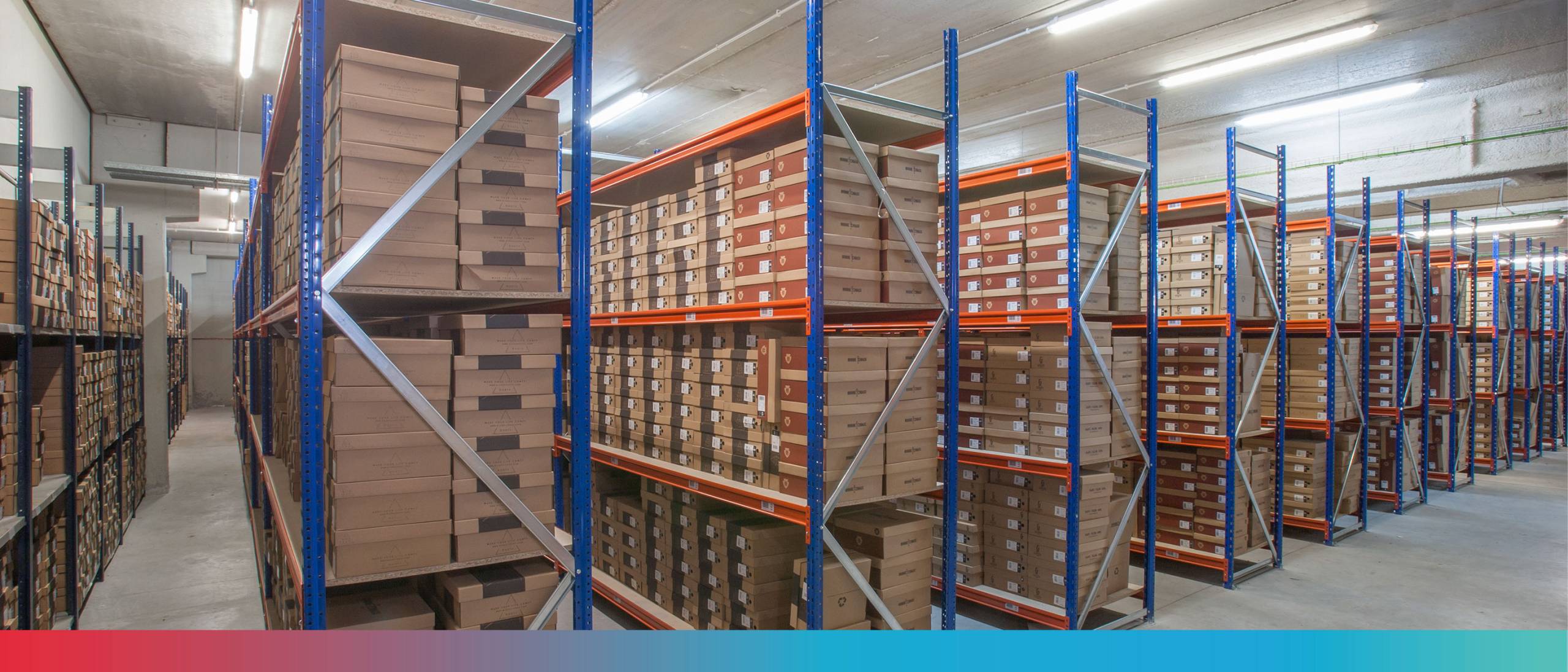
Longspan shelving
Longspan shelving suits bulkier or irregularly shaped items that don’t sit well on standard shelf depths – for example, spare parts, packaging materials, or stock that varies in size batch to batch. The wider bays and adjustable beam heights make it a strong fit for stock that doesn’t come in neat, uniform boxes. Longspan doesn’t require a shelf at floor level, meaning palletised goods can be stored on the ground, with hand pick operations on the shelves above – a set up commonly used in wholesale environments and builders merchants.
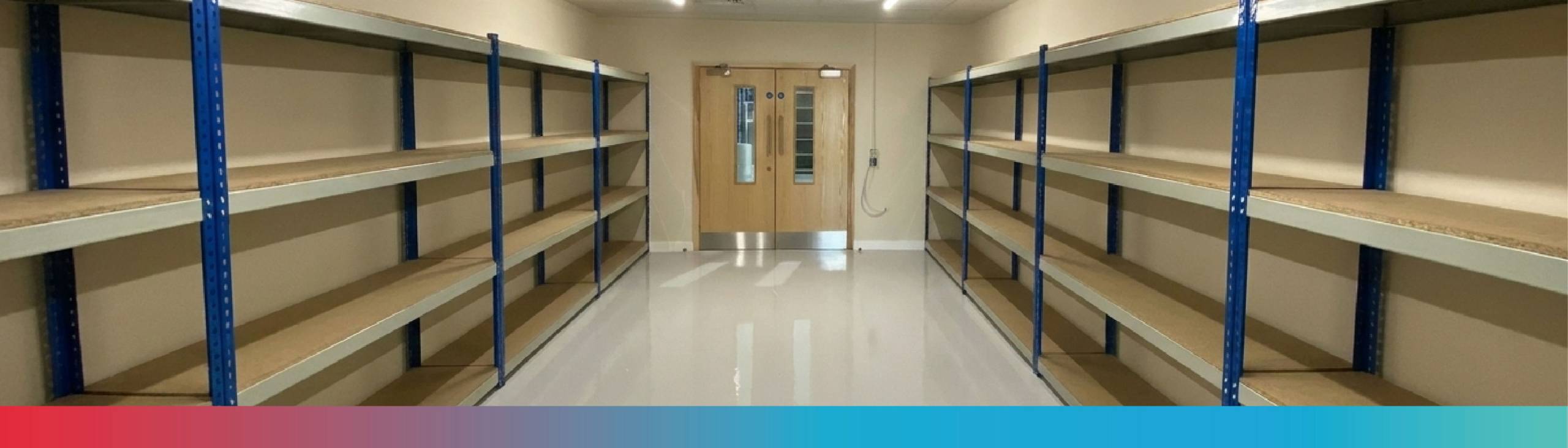
Boltless shelving
Quick to assemble and just as quick to reconfigure, boltless shelving is a practical and cost efficient choice for growing operations that expect their layout to change. No fixings, no tools, shelf heights that adjust as stock profiles shift and a wide range of sizes, shelf materials and load capacities up to 800kg depending on specifications.
Adjustable shelving
Where boltless shelving prioritises speed, adjustable steel shelving is the choice for long-term flexibility. Shelf levels can move as products come and go, without needing to redesign the bay from scratch.
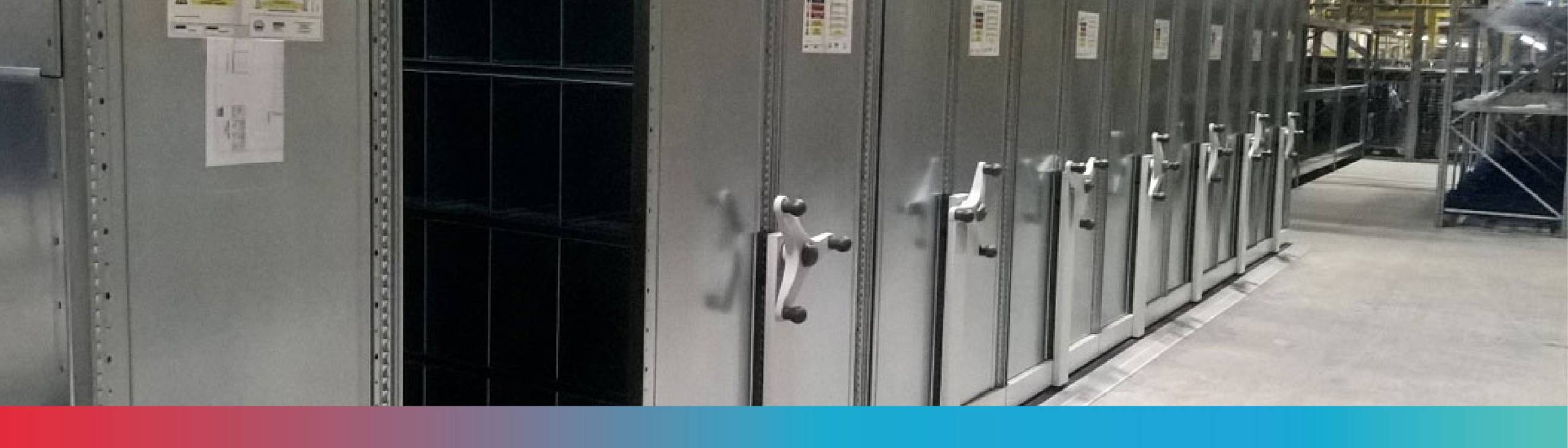
Mobile & compact shelving
For sites where floor space is the real constraint, mobile shelving compresses aisle space by moving units on tracks, only opening the aisle you need. It’s a strong option where inventory density matters more than pick speed. This solution is commonly used in archive sites and retail stockrooms where space is limited but stock requirements are high.
Industrial steel shelving
Industrial steel shelving is the workhorse option – built for medium duty shelving and heavy duty shelving loads, and rated up to extra heavy duty shelving specifications where stock is dense or awkward. It’s the type most operations default to, and for good reason: durability without unnecessary bulk.
Chrome wire shelving
Lighter duty, easy to keep clean, chrome wire shelving works well in smaller stockrooms, retail storage, clean environments or anywhere ventilation and visibility matter most.

Multi-tier shelving
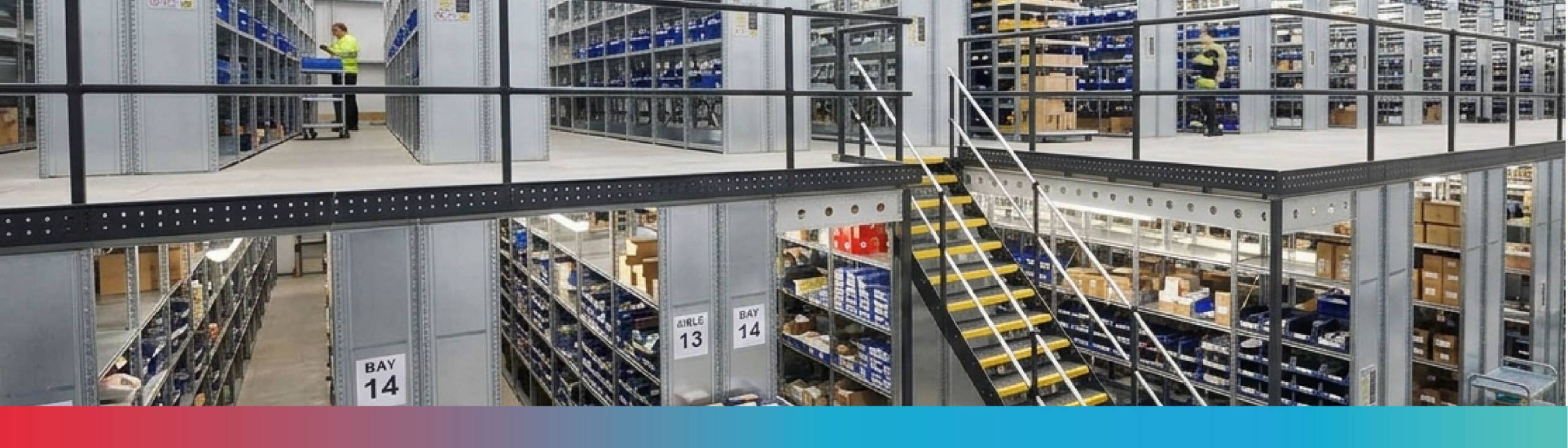
For sites with building height to spare but limited floor space, multi-tier shelving extends shelving height vertically, split by a first floor level, stairs and walkways. It’s a strong way to multiply storage without extending the building footprint.
Benefits of warehouse shelving
Well configured shelves in warehouse spaces do much more than hold stock, they shape how efficiently a whole warehouse shift can run, providing the layout, shelf labelling and shelf type are best suited for the operation.
Improved accessibility & efficiency
Shelving layout and stock placement puts fast moving product lines within easy reach and slower stock further out, cutting the distance staff walk on every pick. Small changes in layout logic can have a big impact across a full shift, and over time that creates a meaningful uplift in warehouse efficiency.
Cost-effective
Compared with automated storage systems or large scale pallet racking systems, warehouse shelves offer a lower cost route to achieving organised storage capacity – particularly useful for growing businesses that need greater storage density now without committing to a full scale storage overhaul.
Flexibility and scaling
Shelving systems, especially boltless and adjustable types, scale with the business. Bays can be added, reconfigured, or repurposed as product ranges shift and SKU management gets more complex, with the ability to add shelves more cost effectively.
How to choose the right warehouse shelves for your layout
The right storage system for your warehouse layout depends less on what’s popular and more on these three factors.
Item size & weight:
- This determines whether you need light-duty shelving, industrial steel shelving, or something rated for extra heavy duty shelving loads. Capacities are usually determined by shelf capacity, but consideration also needs to be given to overall bay capacity and the distribution of weight.
Picking frequency:
- High frequency hand pick operations benefit when fast moving stock is positioned on shelves at waist to eye level with clear aisle access, while slower moving stock can sit higher or lower.
Space constraints:
- Where floor space is limited, mezzanine floors can add a second storage level above shelving or racking, effectively doubling usable space without extending the building. Add-on features such as pallet loading gates and goods scutes make fulfilment and replenishment operations faster and more efficient. Multi-tier shelving systems is also an excellent solution to utilising headroom space.
Getting these three right before ordering anything avoids the common trap of buying a system that looks efficient on paper but doesn’t match how staff actually work the floor.
Safety & compliance
Shelving carries compliance responsibilities as much as pallet racking does, and it’s often overlooked because the loads feel lighter.
In warehouse and stockroom environments, safe working loads should be clearly labelled on bays of shelving, and staff need to know what that means in practice, not just in theory. Access routes between shelving runs should stay clear and be wide enough for trolleys or pickers to pass without squeezing past stock. Taller units, particularly multi-tier and longspan configurations, need proper anchoring to the floor or structure to prevent tipping under load or impact.
Routine checks can seem a mundane task, but they do matter. The HSE’s HSG76 guidance on warehousing and storage sets out the standards most UK operations are expected to meet, covering everything from load limits to manual handling around storage equipment. It’s worth building a copy into your safety documentation rather than an after thought.
Integrating your warehouse shelving & storage
Shelves in a warehouse application rarely work in isolation. The strongest layouts treat storage as one connected system which may include pallet racking for bulk storage, shelving units for hand-picked stock and pick and pack workflows, mezzanines for vertical space, and picking stations positioned where the flow actually happens.
Thinking about these elements together, rather than sourcing them separately, tends to produce a layout that holds up as volumes change. That’s the difference between a warehouse that’s been fitted out and one that’s been designed – creating smarter spaces that keep pace with a growing business, not just a snapshot of where it is today.
Talk to BSE UK about your shelving
Every warehouse carries its own mix of stock, space and picking patterns, and the right shelving setup follows from that — not the other way round. If you’re weighing up boltless against longspan, working out where shelving should give way to racking, or planning a layout around a mezzanine, it’s worth talking it through.
Get in touch with the team at BSE UK:
Call: 0117 955 5211 Email: [email protected]