

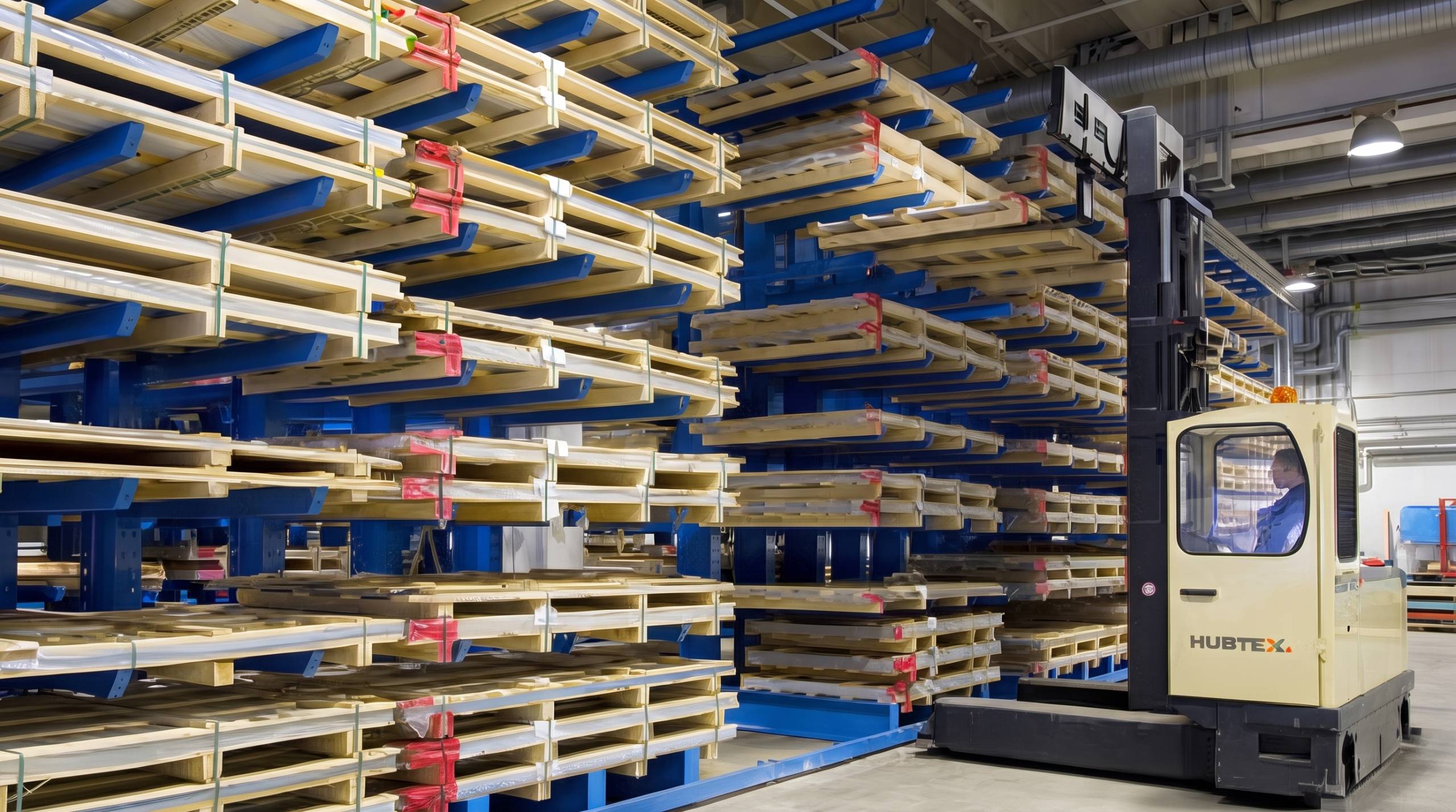
Not every pallet or product fits neatly onto a standard pallet racking system. Long lengths, awkward shapes, and genuinely oversized loads need a different kind of storage solution, which is where cantilever pallet racking earns its place in the warehouse.
This guide works through how to tell the two systems apart by SKU profile, when each one is the right call, and where a hybrid layout combining both makes more sense than picking a single system for the whole site.
Standard vs non-standard unit loads
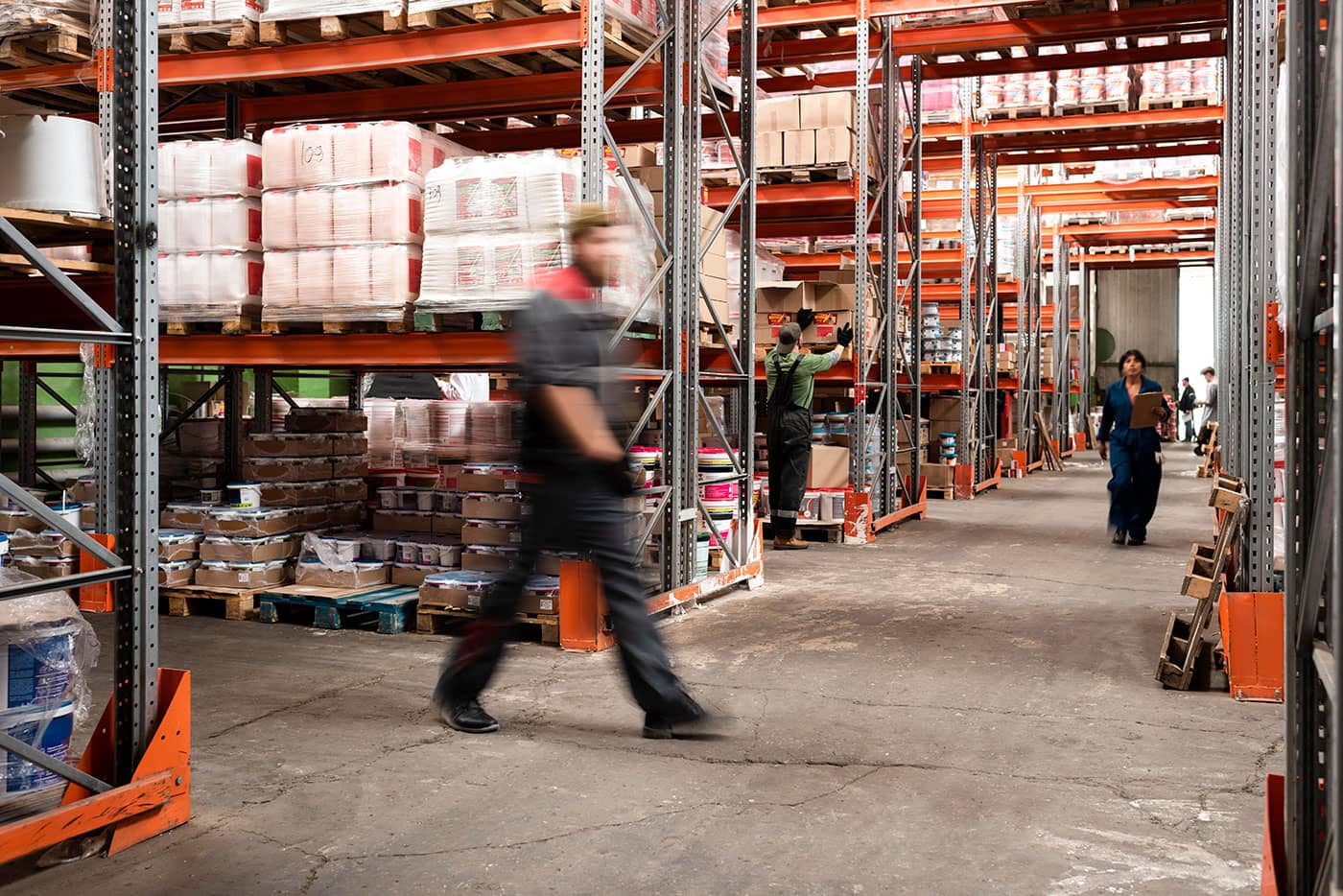
Most warehouse inventory is uniform enough for standard pallet racking systems – boxed, palletised, and a broadly consistent footprint from one unit load to the next.
Choosing pallet racking for standard loads
Pallet racking systems work well when:
- Stock arrives on standard pallets. UK and Euro pallet sizes fit predictably into a beam and upright configuration without wasted bay width.
- Loads stack cleanly. Uniform unit loads make the most of vertical storage density, whether you’re running wide aisle, narrow aisle, or a very narrow aisle (VNA) layout.
- Throughput matters more than length. Standard racking layouts are built around consistent pick speeds and predictable pallet positions, which is exactly what most warehouse storage needs.
What to do when inventory is long, heavy or awkward
The moment stock stops fitting the standard mould – timber, tubing, sheet material, coils, or anything that overhangs a normal pallet footprint – a conventional racking layout starts working against you rather than for you. This is the point where cantilever racking systems become the more sensible storage solution, since they’re designed around length and shape rather than a fixed pallet footprint.
Managing warehouse inventory with pallet racking
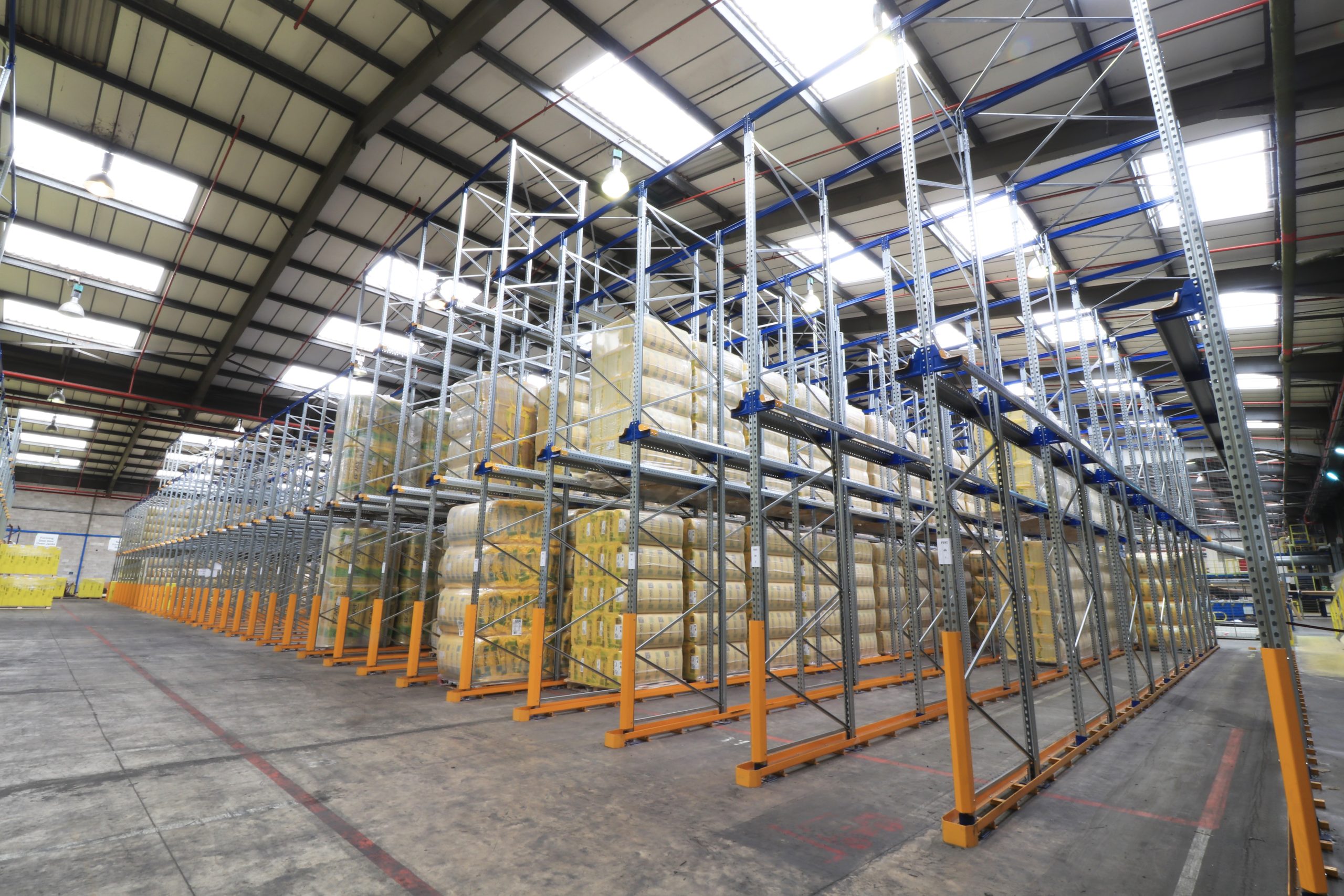
For genuinely uniform stock, the choice within pallet racking systems themselves – wide aisle, narrow aisle, VNA, double-deep, drive-in, or push-back – has more impact on day-to-day performance than most operators expect. The right call comes down to SKU velocity as much as pallet dimensions: fast-moving lines need selective access, while bulk or slow-turnover stock can trade selectivity for density.
- Wide aisle racking gives the easiest forklift access and the fastest pick speeds, at the cost of some floor space. This is the default for fast-moving SKUs where every pallet needs to be reachable without shuffling stock.
- Narrow aisle and VNA layouts trade a slower, more specialised handling process (turret trucks rather than standard counterbalance forklifts) for a meaningful jump in storage density – worth the equipment investment once floor space becomes the binding constraint.
- Double-deep racking doubles pallet positions per aisle but sacrifices direct access to the rear pallet, so it suits lower-turnover stock better than fast-moving lines, and needs reach trucks capable of double-deep extension.
- Drive-in and drive-through racking pushes density further still by letting forklifts enter the racking structure itself, at the cost of strict FIFO or LIFO rotation – a good fit for bulk, single-SKU storage where selectivity barely matters.
- Push-back racking nests pallets on gravity-fed carts, storing two to five pallets deep from a single aisle. It sits between wide aisle and drive-in on the density-versus-selectivity scale, which makes it a common middle-ground choice for medium-turnover stock.
Limitations of warehouse pallet racking
Forcing the wrong stock into the wrong racking configuration is where most warehouse storage problems start. Overhanging loads on standard beams create snagging risks and unstable stacking; oversized or irregular items pushed into a double-deep or drive-in layout block access to everything behind them, and fast-moving SKUs stored in a high-density system end up costing more in handling time than the extra pallet positions ever save. Matching the racking type to the actual SKU profile – not just the available floor space – avoids most of this before it happens.
When cantilever pallet racking is a better choice
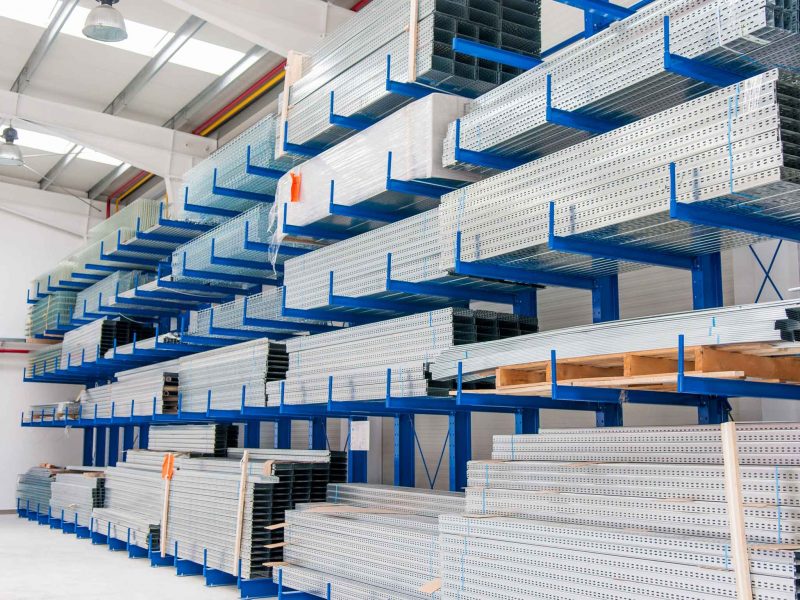
Cantilever racking removes the frontal uprights that standard pallet racking systems rely on, replacing them with arms that project from a single column line. That single change is what makes it the right system for long, heavy, or irregularly shaped loads:
- No upright obstruction. Stock can be loaded and unloaded from the side without navigating around vertical frames.
- Genuinely variable length storage. Timber, steel bar, pipework, and sheet material of different lengths can sit on the same run without wasted bay width.
- Easier visual stock checks. Open-sided storage makes it simpler to see what’s on each arm level at a glance, which speeds up picking for irregular stock.
- Handles mixed load types on the same run. Timber, steel bar, and sheet material of different lengths can share adjustable arm levels without redesigning the whole bay – useful where SKU profiles change more often than the racking itself.
- Works indoors or outdoors. Cantilever racking is often galvanised for exterior yard storage as well as internal warehouse use, unlike most pallet racking, which is rarely built to handle exposed conditions.
Cantilever racking turns up most often in builders’ merchants, timber yards, steel stockholders, and pipe or cable suppliers – anywhere stock is defined by length rather than pallet count.
The best layout for cantilever racking
- Single sided vs double sided. A single sided run against a wall suits sites with limited depth; double sided cantilever racking – loaded from both sides along a central aisle – makes better use of floor space where width allows.
- Wall-mounted vs central aisle placement. Wall-mounted runs free up the rest of the floor for other storage systems, while a central aisle layout works best when cantilever racking is the main storage method rather than a secondary one.
- Arm level height and spacing. Arms can be positioned to match your specific product range, but every level needs enough clearance for safe loading and unloading – a layout spaced too tightly undermines the easy access cantilever racking is meant to provide.
The ‘Right Choice’ Checklist
A few quick questions to run through before committing either way:
- What’s the longest 10% of my inventory? If a meaningful proportion of stock regularly exceeds standard pallet dimensions, that’s a strong signal toward cantilever pallet racking.
- What’s the turning circle of my current forklift fleet? Aisle widths for cantilever racking systems and narrow aisle pallet racking systems have different practical minimums – check your equipment fits before committing to a layout.
- Is my stock crushable or stackable? Cantilever arms support loads individually rather than relying on stacked weight distribution, which matters for anything that can’t take pressure from above. Load capacity itself depends on arm length, column spacing, and the specific configuration, so it’s worth getting a proper capacity calculation checked against your actual unit loads rather than assuming a standard specification will cover it.
- Am I planning for today’s inventory or next year’s contracts? A racking layout sized tightly to current SKU profiles can become a constraint the moment product ranges shift.
- What’s the real cost trade-off per bay? Cantilever racking systems typically cost more than an equivalent run of standard pallet racking, since the arms and column structure are engineered for point loading rather than distributed pallet weight – though forcing long or awkward loads onto standard pallet racking creates its own costs in damaged stock and lost bay width.
If you’re working through this list and want a second opinion, our team is happy to talk it through – get in touch and we’ll help you weigh it up against your actual floor plan.
For the underlying safety standards behind load capacities and racking design, SEMA guidance on racking design and safe use is a good reference point before finalising a layout.
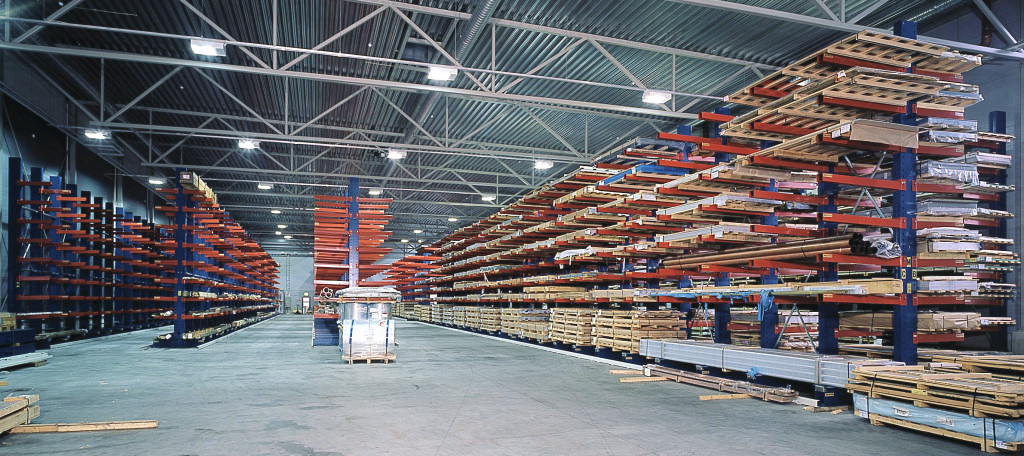
Cantilever vs pallet racking: a hybrid approach
For most warehouses, one system rarely covers everything on its own. A hybrid layout puts standard pallet racking systems where stock is uniform and throughput matters, and cantilever pallet racking where length or shape genuinely demands it. Zoning cantilever racking systems and standard pallet racking systems by stock type, rather than trying to force every SKU into a single racking layout, usually gets more usable storage density out of the same footprint than standardising on one system across the whole floor.
Need help choosing between cantilever and pallet racking?
Get in touch on 0117 955 5211 or [email protected] and we’ll help you match the right racking system to your actual SKU profile.