



Quick answer: Good team collaboration starts with giving your people reasons to be together, and spaces that make it easy and enjoyable when they are. Design the office around what your team comes in to do, whether that’s working on a project, learning from a colleague or meeting a client, and collaboration tends to follow naturally, at work and beyond it.
Some of the most useful collaboration in a business happens in between the meetings. It might be a question asked over coffee or a quick look at someone’s screen to test an idea, and it’s often the chat on the way back from a client visit that moves a project on. These moments are hard to plan for, and easy to encourage when the workplace gives people room to cross paths.
As a business grows, people can no longer pick up what’s going on just by sitting nearby. The informal knowledge that once moved easily around a small team needs a little more help to reach everyone, and how you bring people together, and where, starts to play a real part in how well the business grows.
The encouraging part is that collaboration responds well to a little support. Give your team clear reasons to come together, spaces that make it easy, and a culture where sharing ideas is part of everyday work, and it tends to build on itself.
What are the benefits of collaboration?
Collaboration does far more than speed up projects. When people work closely together, knowledge moves faster, problems get solved by the people closest to them, and newer team members develop much more quickly than they would on their own.
- Better ideas: different perspectives in the same conversation lead to stronger, more rounded solutions.
- Faster learning: junior colleagues pick up skills and context by working alongside experienced people.
- Shared knowledge: information spreads across teams rather than sitting with one person, which makes the business more resilient as it grows.
- Stronger relationships: people who know each other well communicate more openly and support each other through busy periods.
- A sense of belonging: being part of a team that works well together is one of the things that makes people want to stay.
Each of these compounds over time. A team that shares what it knows becomes easier to grow, because every new person joins a culture that is already helping them learn.
How has the UK way of working changed?
The way the UK works has shifted considerably over the past few years. Hybrid working has settled into a lasting pattern for many office-based teams, and since April 2024 employees have had the right to request flexible working from their first day in a new role.
Employers have responded thoughtfully. Alongside the practical questions of desks and days, more businesses are asking what they want the office to do for their people, and the answers increasingly centre on connection, learning, culture and the kind of collaboration that works best face to face.
Information sharing has evolved with it. Day to day updates now move easily through digital tools, which frees up time together in person for the conversations that benefit most from it: talking through a complex problem, giving feedback, building trust with a new colleague or shaping an idea from scratch. Time in the office has become more valuable because it’s more intentional.
What are the different types of collaboration?
Collaboration covers several quite different ways of working together, and each one benefits from something slightly different in the space and the culture around it.
Project collaboration
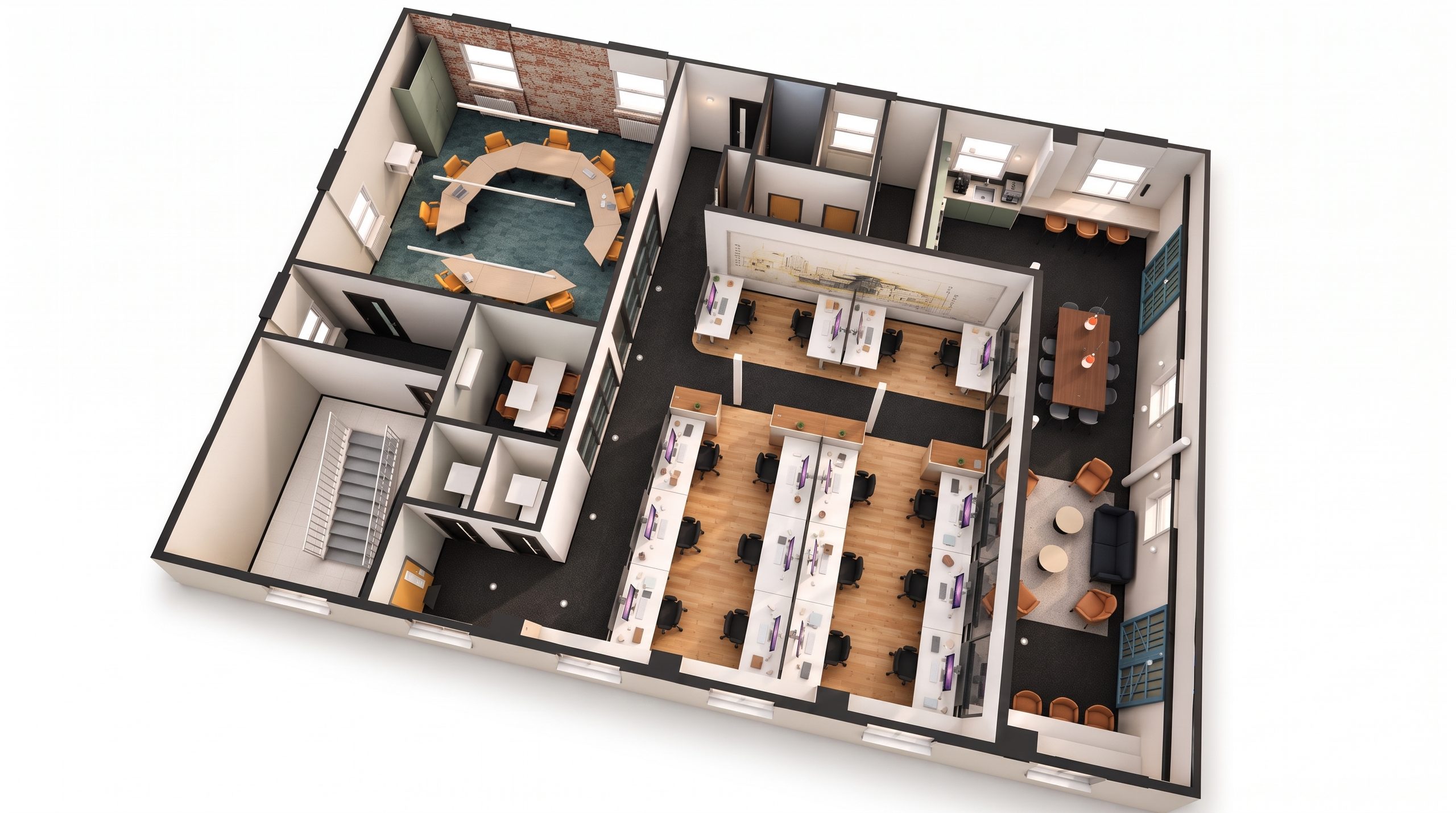
Teams working towards a shared goal over weeks or months – a product launch, a client project, a new process. This kind of work benefits from a place for teams to gather, see progress at a glance and pick up where everyone left off. See how this kind of collaboration space could be included in your office layout.
Spontaneous collaboration
The quick question, the passing conversation or the idea that comes up during a chat by the coffee machine. It happens most where people naturally cross paths, which is why the position of kitchens and breakout areas matters as much as their design.
Creative collaboration
Brainstorms and workshops where the aim is to generate ideas rather than refine them. Room to move, surfaces to write on and the freedom to be a little louder all help ideas flow.
Learning and mentoring
Much of what people learn at work is absorbed rather than taught – hearing how a colleague handles a tricky call, or being shown a quicker way to do something. Mentoring and coaching add the deliberate side, and both work best when people sit within easy reach of each other.
Cross-team collaboration
Some of the most useful conversations happen between departments: sales hearing from operations, finance working alongside project teams. Shared spaces used by several teams give these connections a chance to form naturally.
Hybrid collaboration
Meetings where some people are in the room and others join remotely. Good audio-visual set-ups and rooms designed with both groups in mind help everyone contribute equally, wherever they are.
Social collaboration
Lunch together, a team celebration, a chat at the end of the day. It looks informal, and it’s where much of the trust that makes every other kind of collaboration possible is built.

What does your team need to come together to do?
A helpful way to plan for all of this is to start with the reasons people come together, then match each one to the space and support it needs:
| Employee comes in to… | Fit-out response |
| Collaborate | Flexible project rooms, writable surfaces, team tables |
| Brainstorm | Informal collaboration spaces |
| Learn / mentor | Small meeting and coaching spaces |
| Socialise | Hospitality style breakout areas |
| Build relationships | Communal areas and social spaces |
| Have important conversations | Comfortable enclosed rooms |
| Create / make | Specialist spaces, equipment, materials |
| Focus away from home distractions | High quality quiet and focus rooms |
| Meet clients | Professional, adaptable meeting spaces |
| Feel part of the organisation | A stronger sense of identity and culture |
Few businesses weight all ten equally. A creative studio might lean towards creating and brainstorming, while a professional services firm may place more emphasis on client meetings and important conversations. Asking each team lead which reasons matter most to their people is a quick and useful way to shape the brief.
How can you encourage your team to collaborate more?
Space gives collaboration somewhere to happen, and culture gives people the confidence to use it. A few approaches that work well in growing businesses:
- Give office days a shared purpose. Coordinating when teams are in together means people arrive knowing who they’ll see and what they’ll work on.
- Lead by example. When leaders are visible, approachable and open about their own work, others follow.
- Make sharing a habit. Lunch and learns, short show and tell sessions and project walls help knowledge move between teams without adding meetings.
- Pair people up. Mentoring partnerships and buddies for new starters build relationships across experience levels from day one.
- Celebrate together. Marking wins, milestones and anniversaries in person reinforces that the team succeeds as a team.
- Ask your team. The people using the space every day often have the clearest ideas about what would help them work together.
- Offer choice. A range of settings – quiet, collaborative, social – lets people pick the right place for the task in hand.
How does office design support collaboration?
People make a considered choice each time they decide to come into the office. When the workplace offers something home can’t – colleagues to learn from, rooms to create in, a place that feels part of something bigger – that choice becomes an easy one.
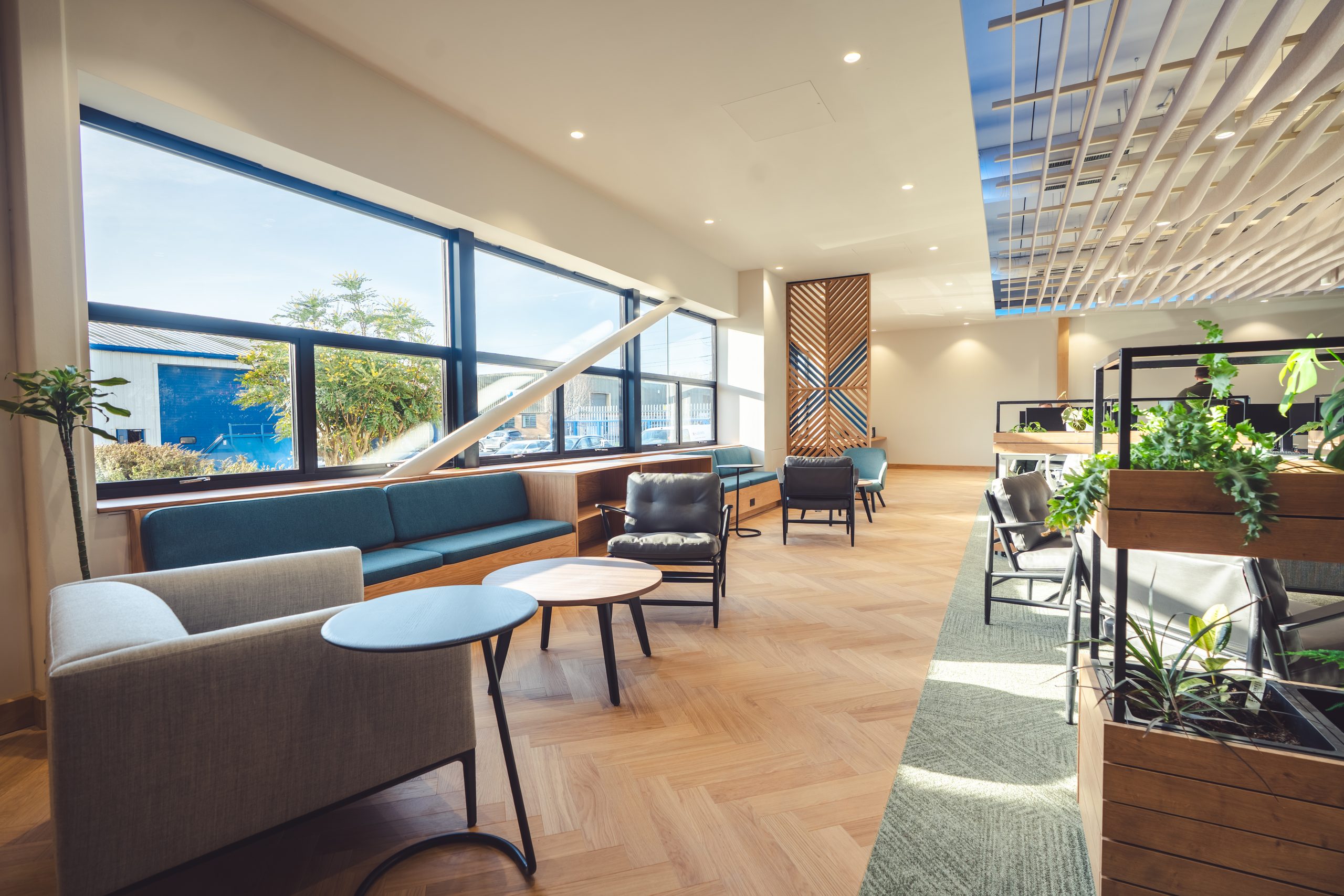
That makes the fit-out an important part of your hybrid working offer. A floor plan built mainly around individual desks suits focused solo work well. One that balances desks with project rooms, breakout areas, focus rooms and comfortable places to take calls gives people the full range of reasons to come together.
Zoning helps both sit comfortably side by side. Grouping livelier collaborative and social areas away from quieter focus space, with good acoustic treatment in between, means teams can talk freely while colleagues who need to concentrate can do so. Phone booths close to where teams sit give people a private place to take a call without stepping far from their colleagues.
Identity matters too. An office that reflects your brand, values and work gives people a sense of belonging the moment they walk in, and gives visitors a clear picture of who you are.
Why does collaboration outside work matter?
The bonus of a team that collaborates well at work is that it often carries on beyond it. Colleagues who enjoy each other’s company start organising their own lunches, five-a-side games, quiz nights and charity challenges, and those shared experiences feed straight back into how they work together.
Relationships built outside the day job make everyday collaboration easier. People who have trained for the same run or raised money for a cause together tend to ask each other for help more readily, share ideas more freely and give feedback with more trust.
The office can play a part in this as well. A kitchen or breakout area that doubles as a venue for a team breakfast, a celebration or an event after work gives these moments a natural home, while volunteering days and community partnerships give teams the chance to work together on something completely different. Each one strengthens the connections that make collaboration feel natural.
Can you encourage collaboration within the space you already have?
In many cases, yes. Hybrid patterns often free up desks that can be reallocated to project rooms, breakout and focus space, creating a more collaborative office within the same footprint. Getting the balance right for how your team works today, and working out how much office space you need as the business grows, is where careful planning pays off.
If you’re planning a move, the same approach applies earlier. Size the new office around the activities it needs to support as well as the number of people, and collaboration is built in from the start.
How do I get my team to collaborate more?
Every team collaborates in its own way, so no single layout or policy suits every business. The starting point is the same for all of them: understand why your people come together, then give them the spaces, habits and encouragement that make those moments easy and enjoyable. A few questions to guide the conversation:
- What does your team come together to do? Which types of collaboration matter most to each team?
- Where do conversations happen today? Notice where people naturally gather, and build on it.
- How is knowledge shared? Look at how information moves between teams and reaches new starters.
- Does the space offer variety? Check for a good balance of collaborative, social and quiet settings.
- Does it feel like yours? Consider whether the office reflects your culture and values.
- Can it grow with you? Make sure the layout can adapt as teams grow and ways of working change.
BSE UK’s office fit out team designs workplaces around how your people work together, now and as your business grows.
