Warehouse Racking Regulations: The Hidden Compliance Gaps Most Sites Miss
Warehouse racking regulations rarely sit at the top of a growing business’s priority list for most. When orders are increasing and new products are coming in, space gets tighter and your focus is usually on keeping things moving.
But compliance issues with warehouse racking regulation systems often don’t show up until something goes wrong. And by then, the disruption, cost and pressure can be far greater than most sites expect.
Here, we look beyond the obvious inspections and routine tick box exercises. It focuses on common areas where compliance really breaks down, why those gaps appear, and how UK warehouses can manage warehouse racking regulations in a way that supports growth rather than holding it back.
What compliance with UK warehouse racking regulations really means
There isn’t a single piece of legislation called “warehouse racking regulations”. Instead, compliance sits across several UK health and safety laws that place ongoing duties on employers and site operators.
The main ones include:
- The Health and Safety at Work etc. Act 1974 (HSWA) – the overarching duty to protect employees and others.
- PUWER (Provision and Use of Work Equipment Regulations 1998) – which covers racking as work equipment.
- The Management of Health and Safety at Work Regulations 1999 (MHSWR) – requiring risk assessments and safe systems of work.
Together, these laws make it clear that warehouse racking regulation systems must be safe, suitable for their use, and properly maintained.
The keyword here is ongoing. Compliance is not a one off event. A racking inspection carried out last year does not guarantee compliance today if the way the warehouse operates has changed. And in most busy UK warehouses, it almost certainly has.
The Health and Safety Executive (HSE) reinforces this approach in its guidance on warehousing and storage, which can be found here.

Why you need more than just inspections
Regular rack inspections are essential. But inspections alone don’t equal compliance with warehouse racking regulations.
There is an important difference between:
- The condition of the racking – is it damaged, overloaded, or incorrectly installed?
- The management of the racking – how it is used day-to-day, who controls changes, and how risks are reassessed.
An inspection tells you what the pallet racking system looks like on a particular day. It does not automatically address how pallets are selected, how loads change, or how drivers interact with the system.
Even after a professional inspection, legal responsibility does not change. The duty to manage risk still sits with the employer or site operator. If damage is noted but not acted on through rack repair or replacement, or if operating practices drift away from the original design, compliance gaps can quickly open up.

Potential responsibility gaps
One of the most common issues with warehouse racking regulations is uncertainty over who is responsible for what.
The most common gaps we find include:
- Senior management assuming inspections cover all legal duties.
- Site managers believing design limitations sit with the installer.
- Operators making informal adjustments to “get the job done”.
- Multi-site businesses applying standards inconsistently across locations.
Legally, responsibility usually sits with the employer, but practical control is often shared across teams. Without clear ownership, things slip such as load notices not being updated, damage reports that don’t get escalated, and temporary fixes becoming permanent solutions.
Across multiple sites, this risk multiplies. One warehouse may be well managed, while another quietly drifts out of alignment with warehouse racking regulation systems that were originally signed off.
Impact of operational changes on compliance
This is where many hidden compliance gaps start. Warehouses evolve faster than their racking assessments.
The most common changes are usually:
- Increased pallet weights
Heavier loads can exceed original design limits. Regulations require risks to be reassessed when loads change, not when something fails. - New SKUs or different load types
Non-uniform or unstable loads behave differently in racking. That changes the risk profile. - Changes to forklift type or reach height
Different trucks introduce different impact risks and clearances, affecting racking safety. - Temporary storage becoming permanent
What starts as a short term overflow storage solution often stays. If it hasn’t been assessed, it’s a compliance gap. - Racking moved or altered without reassessment
Even small layout changes can invalidate original calculations and load notices.
Under UK warehouse racking regulations, any of these changes trigger a duty to review risk assessments. Ignoring them doesn’t remove responsibility.
Training gaps & documentation
Training that doesn’t match reality
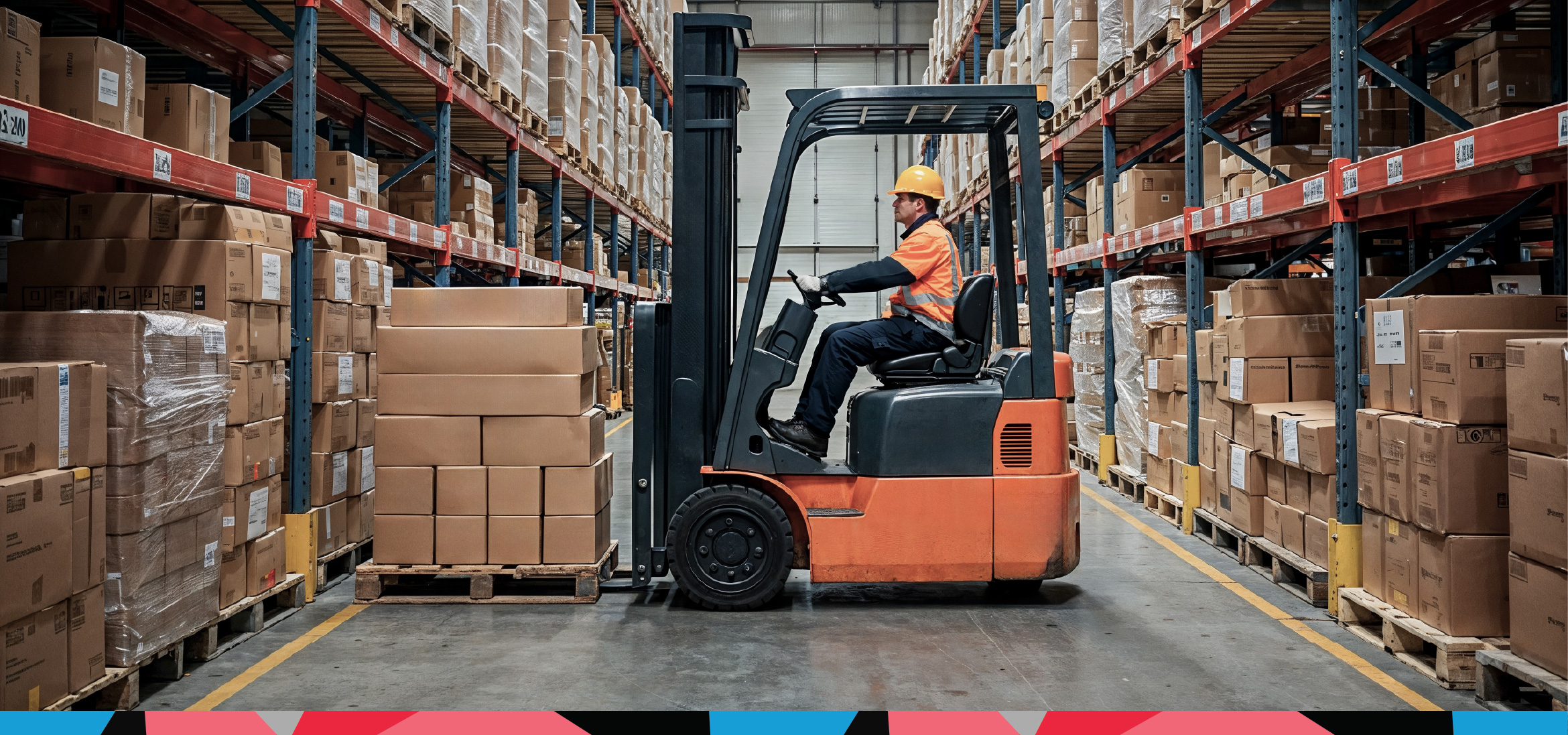
Operators and supervisors are often enrolled onto rack safety awareness training once and expected to adapt forever. In reality, equipment, stock and pressures change as a business grows and transforms.
Common issues include:
- Operators not understanding load limits.
- Supervisors unsure when to escalate damage.
- New starters copying informal workarounds.
Those workarounds often start as practical fixes. Over time, they become “how we do things here”, even if they undermine the warehouse racking regulation systems in place.
Documentation that doesn’t drive action
Paperwork really does matter, but only if it’s used.
Typical problems include:
- Inspection reports filed but not followed up.
- Damaged racking recorded but left in use.
- Load signage that’s missing, incorrect or out of date.
Clear documentation, visible signage and traceable actions are all part of compliance. They also make it far easier to run a warehouse that’s ready to scale without constant fire-fighting.
When non-compliance comes to light
Most sites don’t discover compliance gaps during calm periods. It usually happens after:
- A near-miss or accident.
- An insurance investigation.
- An HSE inspection or enforcement visit.
At that point, what could have been a planned review turns into an urgent disruption in order to comply. Stock has to move. Areas get closed. Costs rise quickly.
The frustrating part? In most cases, these issues are avoidable. The warning signs were there, but they were buried in day-to-day pressure.
How to close the gaps without overcomplicating warehouse racking regulations
Managing warehouse racking regulations doesn’t need layers of process or technical language. The most effective sites focus on a few fundamentals and apply them consistently.
Clear ownership of racking safety
Every site needs a named person responsible for racking safety. This is not just about organising inspections. It’s about knowing who:
- Reviews inspection reports
- Signs off changes to racking or layouts
- Has authority to stop unsafe use
Without clear ownership, issues are identified but not resolved, creating compliance gaps over time.
Reviews triggered by operational change, not just dates
Annual inspections are important, but they are not enough on their own. Compliance with warehouse racking regulations should be reviewed whenever the operation changes, including:
- Heavier pallets or different load types
- New SKUs or storage methods
- Changes to forklift type or reach height
- Racking moved, altered or reused
A simple review at the point of change helps ensure racking is still suitable for how it is being used today.
Training that reflects real warehouse activity
Training works best when it matches reality. Operators and supervisors need guidance that reflects:
- Busy shifts and peak periods
- Common handling risks
- What damage must be reported immediately
- When to stop using racking
When people understand why limits exist, unsafe workarounds are less likely to become standard practice.
Simple systems that lead to action
The strongest warehouse racking regulation systems are usually the simplest. Effective sites focus on:
- Clear, accurate load signage
- Easy damage reporting processes
- Inspection findings that are tracked and closed out
- Documentation that reflects the current setup
If systems are easy to follow, they are far more likely to be used consistently.
Compliance aligned with business objectives
When warehouse racking regulations support operational goals, they stop feeling like a burden. Well-managed racking helps:
- Increase throughput safely
- Reduce unplanned disruption
- Support growth and layout changes
- Maintain consistency across sites
That’s how warehouse racking regulation systems should work - not as a barrier to progress, but as quiet infrastructure that supports the business as it evolves.
Need help closing your warehouse racking compliance gaps?
Keeping your racking safe and fully compliant doesn’t have to be a headache, and having the right guidance makes all the difference.
BSE UK supports your team with rack safety awareness training, tailored to your warehouse and operations. In the training, learn how to identify risks, manage changes, and maintain safe racking systems across your site.
Email [email protected] or call 0117 955 5211 to find out more.
Signup to our newsletter below to receive all our latest news!
By submitting this form you agree to our privacy and data protection policy which governs how we deal with personal data.